


Yantai sunny rubber co.,ltd was established in 2005 and we are the branch company of nuclear industry yantai toncin group. We are a high-tech company of shandong province and the company covers 165 acre of land and it has 22,000m2 of factory area. Currently, the company has three main departments:Product research and development, quality control(including large product testing labs), and automation control.There are 60 skilled technical engineers with mid to high level of qualification and 230 of professional operation staffs working.
Why Choose Us?
High Quality
Our products are manufactured or executed to very high standards, using the finest materials and manufacturing processes.
24h Online Service
We try and respond to all concerns within 24 hours and our teams are always at your disposal in case of any emergencies.
Quality Control
We have professional personnel to monitor the production process, inspect the products and ensure that the final product meets the required quality level standards, guidelines and specifications.
Rich Experience
Dedicated to strict quality control and attentive customer service, our experienced staff is always available to discuss your requirements and ensure complete customer satisfaction.
-
![Heavy Duty Rubber Roller For Machinery]() Heavy Duty Rubber Roller For MachineryProduct Description Yantai Sunny Rubber Co.,Ltd is a famous manufacturer of China. The company specializes in producing accessories for vacuum belt filters, such as rubber fliter belt, friction belt,read more
Heavy Duty Rubber Roller For MachineryProduct Description Yantai Sunny Rubber Co.,Ltd is a famous manufacturer of China. The company specializes in producing accessories for vacuum belt filters, such as rubber fliter belt, friction belt,read more -
![Factory Rubber Sleeve For Industrial Machine, Custom Material Available]() Factory Rubber Sleeve For Industrial Machine, Custom Mate...Product Description Yantai Sunny Rubber Co.,Ltd is a famous manufacturer of China. The company specializes in producing accessories for vacuum belt filters, such as rubber fliter belt, friction belt,read more
Factory Rubber Sleeve For Industrial Machine, Custom Mate...Product Description Yantai Sunny Rubber Co.,Ltd is a famous manufacturer of China. The company specializes in producing accessories for vacuum belt filters, such as rubber fliter belt, friction belt,read more -
![Factory Rubber Roller For Industrial Equipment, Custom Size Available]() Factory Rubber Roller For Industrial Equipment, Custom Si...Product Description Yantai Sunny Rubber Co.,Ltd is a famous manufacturer of China. The company specializes in producing accessories for vacuum belt filters, such as rubber fliter belt, friction belt,read more
Factory Rubber Roller For Industrial Equipment, Custom Si...Product Description Yantai Sunny Rubber Co.,Ltd is a famous manufacturer of China. The company specializes in producing accessories for vacuum belt filters, such as rubber fliter belt, friction belt,read more -
![Original Factory Supply Industrial Rubber Roller, Custom Processing]() Original Factory Supply Industrial Rubber Roller, Custom ...Product Description Yantai Sunny Rubber Co.,Ltd is a famous manufacturer of China. The company specializes in producing accessories for vacuum belt filters, such as rubber fliter belt, friction belt,read more
Original Factory Supply Industrial Rubber Roller, Custom ...Product Description Yantai Sunny Rubber Co.,Ltd is a famous manufacturer of China. The company specializes in producing accessories for vacuum belt filters, such as rubber fliter belt, friction belt,read more -
![Anti-Corrosion Abrasion Resistant Rubber Conveyor Idler Roller]() Anti-Corrosion Abrasion Resistant Rubber Conveyor Idler R...Product Description Yantai Sunny Rubber Co.,Ltd is a famous manufacturer of China. The company specializes in producing accessories for vacuum belt filters, such as rubber fliter belt, friction belt,read more
Anti-Corrosion Abrasion Resistant Rubber Conveyor Idler R...Product Description Yantai Sunny Rubber Co.,Ltd is a famous manufacturer of China. The company specializes in producing accessories for vacuum belt filters, such as rubber fliter belt, friction belt,read more -
![Wear-resistant Anti-corrosion Rubber Coated Idler Roller]() Wear-resistant Anti-corrosion Rubber Coated Idler RollerProduct Description Yantai Sunny Rubber Co.,Ltd is a famous manufacturer of China. The company specializes in producing accessories for vacuum belt filters, such as rubber fliter belt, friction belt,read more
Wear-resistant Anti-corrosion Rubber Coated Idler RollerProduct Description Yantai Sunny Rubber Co.,Ltd is a famous manufacturer of China. The company specializes in producing accessories for vacuum belt filters, such as rubber fliter belt, friction belt,read more -
![High Toughness Wearproof Rubber Idler Roller]() High Toughness Wearproof Rubber Idler RollerProduct Description Yantai Sunny Rubber Co.,Ltd is a famous manufacturer of China. The company specializes in producing accessories for vacuum belt filters, such as rubber fliter belt, friction belt,read more
High Toughness Wearproof Rubber Idler RollerProduct Description Yantai Sunny Rubber Co.,Ltd is a famous manufacturer of China. The company specializes in producing accessories for vacuum belt filters, such as rubber fliter belt, friction belt,read more -
![Anti-Abrasion Corrosion Resistant Rubber Idler Roller]() Anti-Abrasion Corrosion Resistant Rubber Idler RollerProduct Description Yantai Sunny Rubber Co.,Ltd is a famous manufacturer of China. The company specializes in producing accessories for vacuum belt filters, such as rubber fliter belt, friction belt,read more
Anti-Abrasion Corrosion Resistant Rubber Idler RollerProduct Description Yantai Sunny Rubber Co.,Ltd is a famous manufacturer of China. The company specializes in producing accessories for vacuum belt filters, such as rubber fliter belt, friction belt,read more -
![High Wear-Resistant Anti-Corrosion Rubber Idler Roller]() High Wear-Resistant Anti-Corrosion Rubber Idler RollerProduct Description Yantai Sunny Rubber Co.,Ltd is a famous manufacturer of China. The company specializes in producing accessories for vacuum belt filters, such as rubber fliter belt, friction belt,read more
High Wear-Resistant Anti-Corrosion Rubber Idler RollerProduct Description Yantai Sunny Rubber Co.,Ltd is a famous manufacturer of China. The company specializes in producing accessories for vacuum belt filters, such as rubber fliter belt, friction belt,read more -
![High Quality EPDM Rubber Lagged 304 Stainless Steel Banana Roller Belt Conveyor Support Roller Manufacturer]() High Quality EPDM Rubber Lagged 304 Stainless Steel Banan...Packaging & Delivery Package Size 1.00cm * 1.00cm * 1.00cm Package Gross Weight 1.000kg Product Description Rubber Roller Rollers are important parts of conveyor belt. They are available in aread more
High Quality EPDM Rubber Lagged 304 Stainless Steel Banan...Packaging & Delivery Package Size 1.00cm * 1.00cm * 1.00cm Package Gross Weight 1.000kg Product Description Rubber Roller Rollers are important parts of conveyor belt. They are available in aread more -
![EPDM Rubber 304 Stainless Steel Banana Roller Conveyor Belt Support Roller]() EPDM Rubber 304 Stainless Steel Banana Roller Conveyor Be...Packaging & Delivery Package Size 1.00cm * 1.00cm * 1.00cm Package Gross Weight 1.000kg Product Description Rubber Roller Rollers are important parts of conveyor belt. They are available in aread more
EPDM Rubber 304 Stainless Steel Banana Roller Conveyor Be...Packaging & Delivery Package Size 1.00cm * 1.00cm * 1.00cm Package Gross Weight 1.000kg Product Description Rubber Roller Rollers are important parts of conveyor belt. They are available in aread more -
![Food Grade 304 Stainless Steel EPDM Rubber Covered Banana Roller Conveyor Belt Support Idler Roller]() Food Grade 304 Stainless Steel EPDM Rubber Covered Banana...Packaging & Delivery Package Size 1.00cm * 1.00cm * 1.00cm Package Gross Weight 1.000kg Product Description Rubber Roller Rollers are important parts of conveyor belt. They are available in aread more
Food Grade 304 Stainless Steel EPDM Rubber Covered Banana...Packaging & Delivery Package Size 1.00cm * 1.00cm * 1.00cm Package Gross Weight 1.000kg Product Description Rubber Roller Rollers are important parts of conveyor belt. They are available in aread more


What is Rubber Coated Rollers?
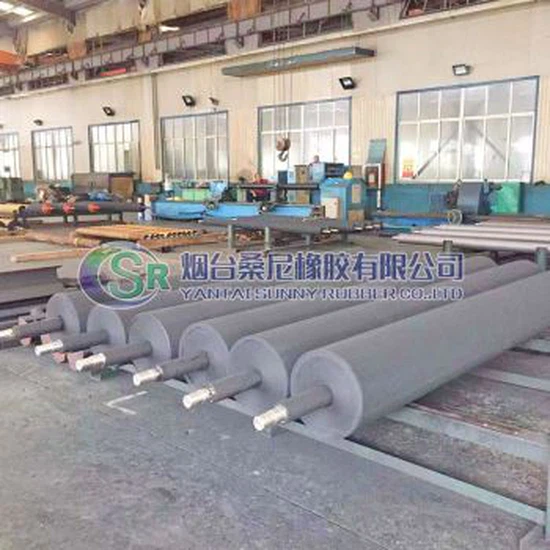
A rubber coated rollers is a sophisticated machine comprising a metallic inner round shaft or tube which is covered through an exterior layer of elastomer compounds or rubber. The inner metallic shaft could be of steel or aluminum or any other industry-specific metal, depends on the rubber coated rollers manufacturer. Coming back to rubber roller layer, the outer layer is generally manufactured using a premium-quality polymer, including polyurethane, silicone, epdm, neoprene, and natural rubber.
Advantages of Rubber Coated Rollers
Durability
One of the biggest benefits of rubber coated rollers is their durability. Rubber is a tough material that can withstand a lot of wear and tear. This makes it ideal for applications where rollers will be used frequently or under harsh conditions.
Affordability
Rubber coated rollers are an affordable option compared to other materials. They have a lower cost per unit and can be manufactured in large quantities at once, which means less time spent on production lines and more money saved over time.
Affordability
Rubber coated rollers are an affordable option compared to other materials. They have a lower cost per unit and can be manufactured in large quantities at once, which means less time spent on production lines and more money saved over time.
Adhesive resistance
Rubber coated rollers are known to be resistant against adhesives. This feature makes them ideal for applications where they come into contact with substances like glue, paint, or other materials that could stick onto roller surfaces.
Rubber covered rollers have found widespread use within the industrial sector. Their ability to protect and remain resistant has made them an essential part of numerous operations to aid manufacturers in the previous few decades.
A large reason why these rollers have emerged as such an integral tool for manufacturers is because of the durability of the rubber coatings. This material has elastic properties, i.E., it can stretch out and then return to its original size.
Its elasticity plays a major role in the manufacturing process and comes with various benefits, including better grip, smooth and/or delicate surfaces, resistance to industrial chemicals, and easy application. The wheels within these rollers have a large number of uses. For example, they are used for conveyor belts in civil and industrial applications, floats, tires, and numerous other products.
They play an integral role in paper, film, coiled metal, textiles, and sheet manufacturing processes as well. With their specific application expanding to numerous dimensions, they are also used in the packaging of fabricate equipment, producing various types of containers and packages, and making up part of the machinery that plays a large role in the grinding and sanding of steel, wood, and aluminum.
Roller Core
The roller core is the rigid structural member which supports the load. It is typically made of high-strength materials such as carbon steel, stainless steel, alloy tool steel, and aluminum alloys. Roller cores are designed according to their applications. They can be further broken down into several parts.
Roller Core Shaft
The shaft is the machine part that connects the whole roller to the motor, sprocket, or other drive units. It is solid in construction, with high strength and uniform hardness. The shaft is designed to endure bending and torsional stresses. Bending stresses are caused by the radial forces against the roller; torsional stresses are from the torque generated by rotating the roller to tangentially move loads. The shaft can be coupled to the drive unit by means of a key and keyseat or by set screws.
Roller Core Cylinder
The cylinder is a hollow part typically in the form of a pipe or tube. This is where the rubber lining is wrapped and bonded. It has sufficient thickness to resist deflection upon application of load. The cylinder is usually made from steel, but other rigid but light materials, such as aluminum and reinforced plastics, can be used.
Roller Core Flange
The flange or end plate connects the cylinder to the shaft. The shaft, cylinder, and flange are typically held together by welds. In some cases, flanges are pressed into place and held by interference fit, which is normally seen on smaller roller constructions.
Roller Core Bearings
Bearings are used to reduce friction against the static and rotating parts. The configuration, mounting, and type of bearing can vary depending on the design of the roller. The configuration described previously has the shaft installed together with the roller cylinder. In other designs, the bearing can be installed on the roller while the shaft is static on the main equipment.
The Production Process of Rubber Coated Rollers
Roller Core Fabrication And Preparation
The cylinder or hollow tube is formed through sheet rolling and welding. This can be done by the rubber roller manufacturer or by a separate plant that supplies steel tubes. The ends of this tube can be machined to receive bearings. If required, flanges or support discs are cut that are sized to fit inside the cylinder. A shaft is fabricated by turning a metal stock in a lathe machine producing a cylindrical core. This shaft can either be welded to the flanges as stated above, or be slid into the bearings on each end of the tube. All dimensions must be accurate to attain the roller's required diameter, roundness, and balance. The flanges are then welded to the ends of the cylinder with the shaft. After fabrication, the roller core is subjected to secondary processes such as blasting and cleaning to remove any traces of corrosion and contaminants on its surface.
Rubber Compounding
Rubber compounding is the formulation process where certain chemicals are added to the raw rubber to modify its final mechanical and chemical properties, lower its cost, and aid its processability and vulcanization. This process involves heating and masticating, which breaks down the rubber‘s polymer chain, making it receptive to the compounding ingredients. It is done through roll mills, banbury mixers, or screw kneaders (extruders). Common compounding ingredients are filler systems (carbon black, silica, calcium carbonate), plasticizers (for softening and processing), stabilizer systems (antioxidants, antiozonants), and vulcanizing agents (sulfur, peroxide).
Bonding And Building
Bonding is the process that involves adhering the rubber cover to the surface of the roller core using a chemical bonding agent or ebonite base layer. Once the bonding components are applied, the rubber building process can begin. Rubber building is the process of covering or lining the rigid roller core with the rubber compound. Some of the general methods for rubber building are explained below.
Plying Process
Plying is the most common method, involving rotating the roller core while feeding calendered rubber sheets or strips. The rubber sheets wind or wrap around the roller until the required diameter is acquired. The roller core can be pressed against two or three rollers to provide pressure to tightly wrap the rubber cover.
Extrusion Process
In this process, instead of using calendered rubber strips, rubber from an extrusion machine is bonded to the surface of a rotating roller core. This process is more suitable for large rollers such as those used in big paper mills.
Casting Or Molding
This process involves placing the roller core into a mold or die where rubber resin is transferred or injected. The resin covers the roller core and is introduced to high heat to cure the rubber.
Vulcanization And Cooling
Vulcanization or curing is the process of creating crosslinks between the elastomer chains or the rubber compound. This makes the rubber more stable, enabling it to resist the effects of heat, cold, and solvents. Vulcanization is done by applying heat to the system, which initiates the bonding of curative agents such as sulfur and peroxide. After heating, the rubber is allowed to cure for several minutes or hours. After which, the rubber roller is cooled for the next stages.
What is Rubber Lined Pulleys?
A rubber lining conveyor pulley is a mechanical contraption, like a conveyor belt, used to adjust the route of the belt in a conveyor system, or to move the belt, or to apply strain to the belt.Pulleys are a lot heavier than belts and are utilized at one or the flip side of the transport or close to the drive/motor.
Advantages of Rubber Lined Pulleys
Shock and noise reduction
Rubber wheels have good buffering effects and shock-absorbing capabilities, which can effectively reduce vibration and noise when the vehicle is driving and improve driving comfort. At the same time, the shock-absorbing properties of rubber wheels can also extend the service life of vehicle components.
Wear-resistant and durable
The rubber wheel has moderate hardness and a certain degree of elasticity and toughness, so it can resist friction and wear well and extend its service life. In addition, rubber wheels also have good weather resistance and corrosion resistance, and can be used in various harsh environments.
Strong crack resistance
The material of the rubber wheel has good strength and toughness, so it has a certain resistance to various external force impacts and deformations. Even if it is crushed or hit by heavy objects, it is not easy to crack or crack.
Application scenarios
Rubber wheels are widely used in various vehicles and mechanical equipment, such as automobiles, railway cars, ships, loaders, forklifts, etc. In these scenarios, the advantages of rubber wheels are brought into play, ensuring the normal driving of the vehicle and the long-term use of the equipment.

Types of Rubber Lined Pulleys
Pulley lagging is an essential part of every belt conveyor system, ensuring that there is proper traction between the pulley and the conveyor belt. Properly lagged pulleys reduce belt slippage and wear on belts. Other benefits include high service life, resistance to corrosion, ensuring maintenance savings, less downtime, and more productivity.
Rubber lagging: The most common type of pulley lagging is rubber lagging, which comes in two forms: Plain rubber lagging and grooved rubber lagging (including diamond, herringbone, and chevron grooves). Rubber is a versatile material that can be changed in thickness, hardness, and the type of grooves it has.
Ceramic lagging is great for places that are rough and need materials that are strong and last a long time. It can have dimple or smooth ceramic tiles, and it can cover different areas.
How to Choose Rubber Lined Pulleys
Belt Type And Running Speed
The run speed of the belt has a significant impact on lagging. However, because belts are more expensive to replace, they should always take precedence. Consider how much speed will wear out the lagging and affect the operating temperature when selecting a pulley lagging.
Pulley Type
Because drive and tail pulleys have different responsibilities, you can choose two different types of lagging for them even if they are on the same conveyor. When a head pulley lags, more grip is required than when a tail pulley lags.
The Operating Environment And Conditions
Climate, wet or dry conditions, and chemical contact all influence the type of pulley lagging used. Conveyor experts, such as can recommend the best type of pulley lagging for your specific operating conditions.
The Type Of Material Being Processed
Product abrasion is an important factor to consider when processing different materials. The abrasiveness of the belting material influences belting requirements, which in turn influences the type of pulley lagging to be used.
Drum/shell
The drum is the pulley area in direct contact with the belt. The tray has a certain surface width and diameter, which is determined by the conveyor belt type.
Shaft
Stepped shafts of different diameters are used in the conveyor pulley to cover all the stresses exerted by the belt with minimal distortion. The shaft is locked between the diaphragm hubs by a locking mechanism. The shaft and pulley assembly is supported by a bearing kit located in a plummer block. Variable shaft diameter offers high torsional resistance to applied loads.
Diaphragm Plate
Both ends of the drum are covered with thick round steel discs. This disc is called a diaphragm plate. They are welded to the shells to provide additional strength to the drum.
Locking Element
The locking components are precisely engineered elements that are mounted over the shaft and on the hub of the pulley via the end plate. The locking element works on the principle of friction, in which tightening a number of screws secures the element to the shaft and hub at the same time.
Hub
The hub is the machine lodging welded to the endplate. The elements of the hub are related to the size of the pulley, the breadth of the shaft, and the size of the locking elements, which are significant for each errand.
Why You Need Rubber Lined Pulleys
Strength
Many people consider rubber to be flimsy and bouncy, like a typical rubber band. However, rubber can also be incredibly strong and firm. The hardness of rubber is measured in durometer, and the average durometer for rubber is between 20-90. Because of its considerable strength, rubber works as an ideal liner to reduce impact in a variety of applications; drive rollers, pulleys, impact bins/pads, and skirt boarding.
Durability
You need a solution to protect your equipment from the daily wear-and-tear and abrasion that comes along with daily use. The durability of rubber makes the perfect abrasion-resistant barrier that will keep your equipment running more smoothly - even with high-abrasion industries like sand or aggregate mining. Protect tanks, fan housings, impellers, containers, and ducts from abrasion problems.
Flexibility
We can cover pretty much anything in rubber- so your options are endless! Rubber liners can be applied to new or existing equipment, in a wide variety of compounds. You can even select your color! Because there are so many options, you can rely on our team of rubber experts to help you select the right type of rubber to best suit your situation.
Protection
Soft natural rubber offers excellent protection from many corrosive materials, like chemicals. Chemical handling systems, scrubbers, reactors, vapor collecting systems, and blower systems can all be protected with rubber.
FAQ
We're professional spillway gate manufacturers and suppliers in China, specialized in providing high quality customized products. We warmly welcome you to buy spillway gate from our factory.
Rubber Pulley And Roller, Rubber Head Pulley, Rubber Pulley For Belt filter